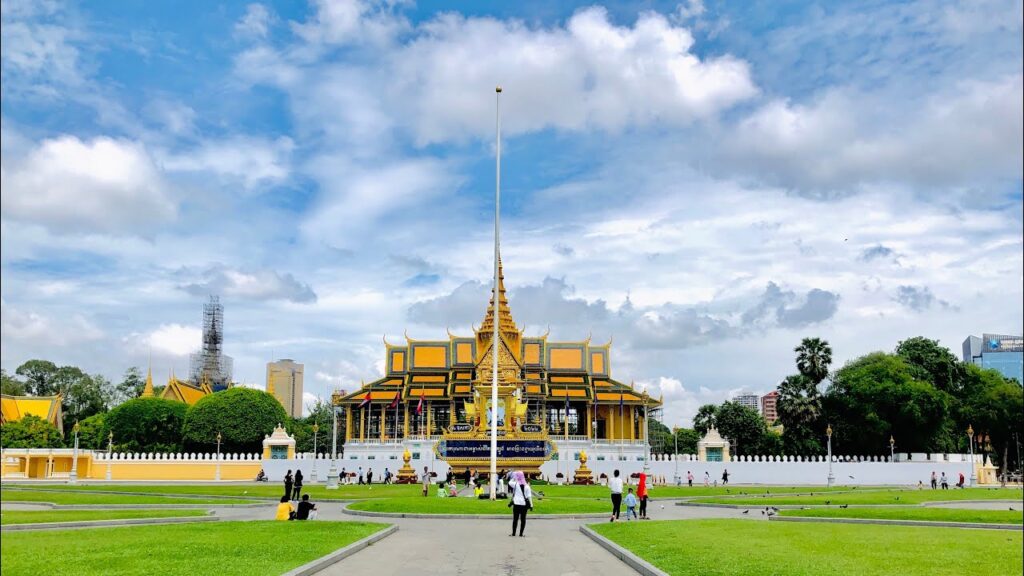


The Royal Palace In Cambodia
Serving as the official residence of the King of Cambodia, the Royal Palace (Preah Barum Reachea Veang) is a spectacular complex of buildings located in the heart of Phnom Penh. Situated where the Tonle Sap, Mekong, and Bassac rivers meet, its classic Khmer roofs and golden spires dominate the city’s waterfront skyline.
The palace was established in 1866 under King Norodom, when the capital was permanently moved to Phnom Penh from the ancient city of Oudong. Today, it remains a powerful symbol of the Cambodian nation, weaving together royal heritage, religious devotion, and classic architectural beauty.
The Throne Hall: The Heart of Royal Ceremony
The most recognizable building within the palace walls is the Throne Hall (Preah Thineang Dheva Vinnichay). Topped with a magnificent 59-meter-high central spire, it is used for high-profile state events, royal coronations, and the presentation of credentials by foreign diplomats.
The grand Throne Hall facade. Nguồn: SuperStock
As you view the exterior and look inside through the grand doorways, notice these remarkable design elements:
- The Layered Roofs: The multi-tiered roofs are painted a brilliant gold and white, trimmed with the traditional chofa—the elegant, sweeping horn-like details at the roof ridges that symbolize protection.
- The Royal Thrones: At the back of the grand hall sit the sacred, elevated thrones used by the King and Queen during coronations, flanked by traditional royal umbrellas.
- The Celestial Ceilings: The vast ceiling is entirely covered in hand-painted, vibrant frescoes depicting the Reamker (the Cambodian epic based on the Ramayana), showcasing ancient battles and celestial dancers.
The Silver Pagoda: A Treasure Trove of Precious Metals
Directly adjacent to the Throne Hall compound is the Silver Pagoda, known officially as Wat Preah Keo Morakot (The Temple of the Emerald Buddha). Unlike standard Buddhist temples, no monks permanently reside here; instead, it serves as a royal repository for spiritual artifacts and national treasures.
The Silver Floor: The entire floor of the main sanctuary is lined with over 5,000 solid silver tiles, each weighing more than one kilogram. While protective carpets shield most of the floor for preservation, small sections near the entrance are left exposed so visitors can feel the cool, metallic surface underfoot.
Inside the pagoda sits a priceless collection of statues that showcases the immense wealth of the historic Khmer monarchy:
- The Emerald Buddha: Seated atop a high golden altar is the temple’s namesake—a magnificent, small Buddha statue crafted from Baccarat crystal (often referred to as emerald due to its brilliant green hue).
- The Solid Gold Buddha: Standing directly in front of the altar is a life-sized statue of the Maitreya Buddha. Forged from 90 kilograms of solid gold, it is encrusted with over 9,500 diamonds, including a massive, 25-carat diamond embedded directly into its crown.
Surrounding Highlights of the Grounds
As you stroll through the manicured palace gardens, you will encounter several other architecturally fascinating structures:
- The Moonlight Pavilion (Preah Thineang Chan Chhaya): This open air wooden pavilion stands right against the outer palace walls facing the main boulevard. It functions as a grand stage for the Royal Ballet and traditional Khmer classical dancers during major state banquets.
- The Ramayana Frescoes: Running along the entire interior of the Silver Pagoda’s outer courtyard walls is a continuous, 600-meter-long covered gallery. Painted around 1900, these historic murals vividly narrate the classic tales of Rama and Sita, though parts are currently undergoing delicate restoration to combat the tropical humidity.
- The Royal Stupas: Sweeping stone towers rise from the manicured lawns surrounding the Silver Pagoda, housing the ashes of past Cambodian monarchs, including King Norodom and King Ang Duong.
Important Rules for Visitors
Because the Royal Palace is a living, working residence of King Norodom Sihamoni, visitor access is strictly managed, and certain areas (such as the private living quarters) are completely closed off.
If you are planning a visit, please keep these guidelines in mind:
- Strict Dress Code: Both men and women must have their shoulders and knees completely covered. Sleeveless shirts, tank tops, short shorts, and miniskirts are strictly banned at the entrance gates.
- Footwear and Photography: You are required to remove your shoes and hats before entering the interior sanctuaries of the Throne Hall and the Silver Pagoda. Photography is completely allowed on the outdoor grounds but is strictly forbidden inside the main buildings to protect the ancient artifacts.
- Midday Closure: The palace gates typically open from 8:00 AM to 11:00 AM, close for a midday break, and reopen from 14:00 PM to 17:00 PM. Checking the schedule ahead of time is always a smart move to avoid arriving during the closing hours.