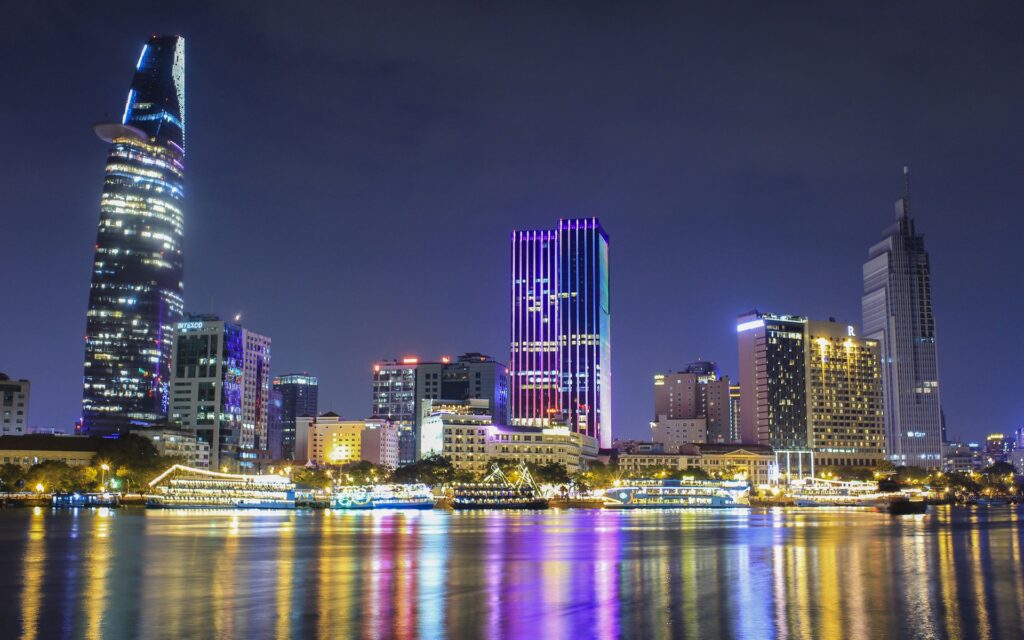


Ho Chi Minh City
Ho Chi Minh City (still fondly referred to locally as Saigon) is a dynamic economic engine and a premier cultural hub. For travel professionals and discerning travelers, managing an itinerary here requires a strategic balance between historical landmarks, architectural heritages, and modern lifestyle concepts.
The city’s primary tourist “hot spots” are structured below by theme, complete with operational insights and structural highlights.
- Historical & Political Landmarks
These sites form the core of Ho Chi Minh City’s cultural and educational tourism, offering deep insights into the nation’s 20th-century history.
Independence Palace (Reunification Hall)
- Overview: The former residence and workplace of the President of South Vietnam during the Vietnam War. It is an architectural masterpiece of modernism blended with traditional Eastern philosophy, designed by architect Ngo Viet Thu. It famously marked the end of the war on April 30, 1975, when North Vietnamese tanks crashed through its gates.
- Key Highlights: The underground war command bunker, the grand reception rooms, and the preserved military helicopters on the rooftop.
- Professional Tip: Ideal for corporate groups and history enthusiasts. Allow at least 1.5 to 2 hours for a comprehensive guided walk.
War Remnants Museum
- Overview: One of the most visited museums in Vietnam, focusing on the graphic realities of the Vietnam War and the First Indochina War.
- Key Highlights: The outdoor display of captured U.S. military aircraft and armor; the deeply moving “Requiem” photography exhibition curated by both sides of the conflict; and the exhibit detailing the legacy of Agent Orange.
- Professional Tip: Due to the highly sensitive and somber nature of the exhibits, it is advised to schedule lighter, more relaxed activities directly following this visit.
- French Colonial Architectural Heritage
Concentrated primarily within District 1, these landmarks offer an elegant look into the city’s late 19th-century urban planning.
Saigon Central Post Office
- Overview: Built between 1886 and 1891, this iconic structure features French colonial architecture combined with classic Gothic and Renaissance elements. The interior features a grand vaulted ceiling and historic hand-painted maps of Southern Vietnam.
- Professional Tip: This remains a fully functioning post office. It pairs perfectly with a stroll down the adjacent Nguyen Van Binh Book Street, a shaded, pedestrian-only avenue lined with cafés and boutique bookstores.
Saigon Notre Dame Cathedral Basilica
- Overview: Located directly across from the Post Office, this neo-Romanesque cathedral was built using distinct red bricks imported directly from Marseille, France.
- Current Status Note: The cathedral is undergoing an extensive, multi-year structural restoration project. While interior access is heavily restricted, the exterior remains an essential photographic backdrop.
Saigon Opera House (Municipal Theatre)
- Overview: An elegant example of French Flamboyant architecture completed in 1898.
- Professional Tip: Interior access is exclusive to ticket holders for live performances. To experience the exceptional acoustics and interior layout, book clients for the acclaimed À Ố Show—a professional production combining traditional Vietnamese bamboo cirque with contemporary acrobatics.
- Vibrant Markets & Cultural Districts
To capture the commercial energy and cultural diversity of the city, these bustling sectors are highly recommended.
Ben Thanh Market
- Overview: A historic symbol of Saigon located at a central transit hub. It features over 1,500 vendors selling everything from textiles and handicrafts to dried goods and regional street food.
- Professional Tip: While excellent for capturing local atmosphere, prices here target tourists. It transitions into a lively Night Market after 7:00 PM, which is excellent for experiential food tours.
Cho Lon (Chinatown & Binh Tay Market)
- Overview: Located across Districts 5 and 6, Cho Lon is the historic heart of the city’s Chinese-Vietnamese community. Binh Tay Market serves as a massive, central wholesale hub featuring beautiful Algerian-influenced Chinese architecture.
- Key Highlights: Thien Hau Temple, an atmospheric, incense-filled sanctuary dedicated to the Taoist Goddess of the Sea.
- Modern Skylines & Urban Spaces
For premium lifestyle experiences, high-end dining, and panoramic views, these modern developments showcase the city’s future.
Nguyen Hue Walking Street & The Café Apartments
- Overview: A broad pedestrian boulevard extending from the French colonial-era People’s Committee Building down to the Saigon Riverfront.
- Key Attraction: No. 42 Nguyen Hue, a mid-century apartment block creatively repurposed into a vertical grid of independent chic cafés, fashion boutiques, and co-working spaces. It is highly popular for evening photography and youth culture observation.
High-Altitude Observation Decks
Venue | Location | Key Feature |
Saigon Skydeck | Bitexco Financial Tower (49th Floor) | Offers classic 360-degree views of District 1 and the winding Saigon River. Famous for its unique helipad architecture. |
Landmark 81 Skyview | Vinhomes Central Park | Located in the tallest skyscraper in Vietnam. Offers a premium, ultra-modern observation experience across the entire metropolitan area. |
Logistics & Excursion Extensions
- Half-Day Excursion: Cu Chi Tunnels (approx. 1.5 hours northwest of the city center). An intricate 250-kilometer underground network used during the war. Speedboat transfers via the Saigon River are highly recommended over road transit to avoid heavy traffic.
- Full-Day Excursion: The Mekong Delta (My Tho / Ben Tre, approx. 2 hours south). Provides a complete contrast to the urban energy, focusing on winding canals, coconut groves, and traditional riverine lifestyles.