

Ta Prohm Temple
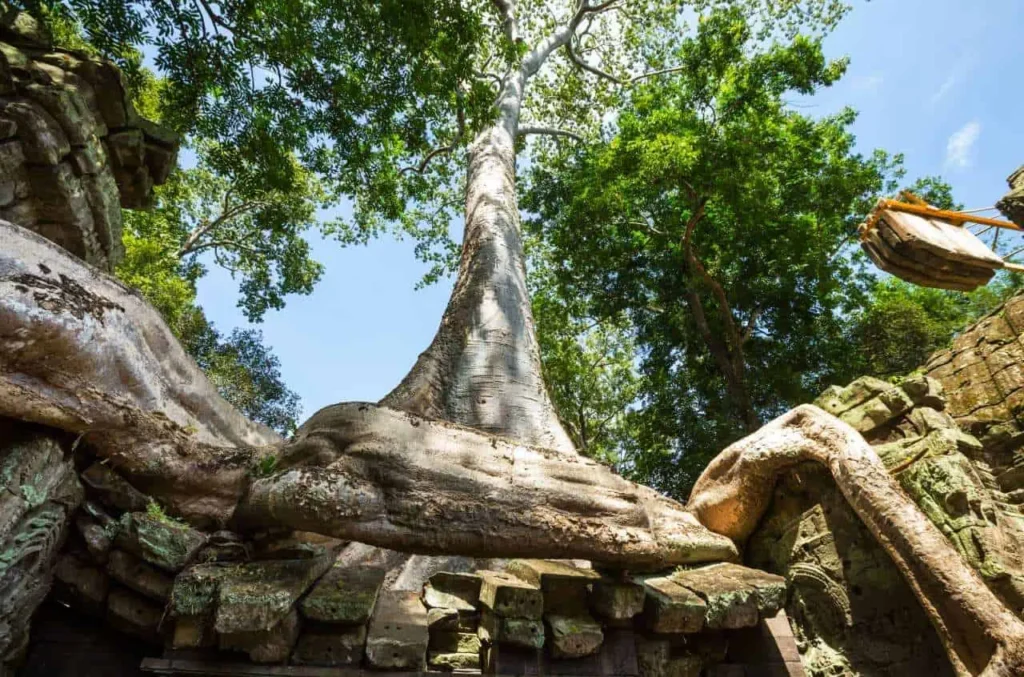
Ta Prohm Temple is arguably one of the most atmospheric and evocative temples in the Angkor Archaeological Park. Unlike grander monuments like Angkor Wat or the meticulously cleared structures of Angkor Thom, Ta Prohm was intentionally left largely as it was found: locked in a dramatic embrace with the Cambodian jungle.
- The Royal Merit: A Temple Built for a Mother
Founded in the late 12th century (around 1186 AD) by the prolific Mahayana Buddhist King Jayavarman VII, Ta Prohm was originally known as Rajavihara (The Royal Monastery).
Jayavarman VII built it as a dynamic monastery and university, dedicating the main image of the temple the Prajnaparamita (the personification of the perfection of wisdom) in honor of his mother. This was part of a pair of massive ancestral dedication projects; its sister temple, Preah Khan, was built a few years later to honor his father.
- A Once-Thriving Jungle City
While it looks like a desolate ruin today, historical inscriptions on the temple walls reveal that Ta Prohm was once the center of a massive, self-sustaining community.
- The Population: Over 12,600 people lived within or directly served the temple complex, including high priests, officials, dancers, and laborers. An additional 80,000 villagers in the surrounding areas provided food and upkeep.
- The Wealth: The inscriptions record vast stores of riches managed by the temple, including thousands of kilograms of gold, silver, silk, and tens of thousands of precious gemstones (including diamonds and pearls).
Architecturally, Ta Prohm is a flat, expansive layout rather than a stepped temple mountain. It features a series of concentric enclosures, dark vaulted galleries, and narrow courtyards centering around a primary sanctuary.
- The Philosophy of “Controlled Conservation”
When the École Française d’Extrême-Orient (EFEO) began restoring the Angkor complex in the early 20th century, archaeologists made a deliberate artistic and practical choice with Ta Prohm. They decided to leave the monstrous tree roots intact to showcase exactly how nature had reclaimed the empire after its 15th-century decline.
This has created a delicate, ongoing puzzle for modern conservationists (currently managed through a joint partnership between the APSARA National Authority and the Archaeological Survey of India):
- The Trees: The main culprits are the massive Spung trees (silk-cotton trees) and Strangler Figs.
- The Structural Paradox: The roots act as a double-edged sword. While their heavy wooden limbs actively crack and separate the ancient sandstone blocks, they have also grown so deeply into the structure that they act as living buttresses. Cutting down certain trees would cause the immediate collapse of the walls underneath them. Today, internal steel supports, wooden scaffolding, and hidden tie-rods are used to stabilize the stone while keeping the trees alive.
- Pop Culture and the Modern Visit
Ta Prohm earned massive global fame after featuring prominently in the 2001 film Lara Croft: Tomb Raider. The iconic shot of Angelina Jolie standing before a doorway framed by a cascading waterfall of roots cemented the site’s nickname as the “Tomb Raider Temple.”
Another quirky detail that draws visitors is the famous “Stegosaur carving.” On a small stone pilaster near one of the entrances, a series of circular medallions features various animals one of which bears a striking resemblance to a plated dinosaur, prompting endless popular theories and debates regarding its true origin (most likely a boar or a rhino framed by stylized background leaves).
Pro Tip for Visitors: Because of its enclosed corridors and dense overhead jungle canopy, Ta Prohm remains shaded and slightly cooler than open sites during midday, but it can feel incredibly claustrophobic when tour crowds peak. Visiting early in the morning arrive when the gates open at 7:30 AM offers the best chance to experience the temple’s quiet, mystical ambience with nothing but the sound of birds and rustling leaves.